Speech Delay Activities for 2-Year-Olds: What a Speech Therapist Actually Recommends (Not Just Play Ideas)
By Rachel Monroe
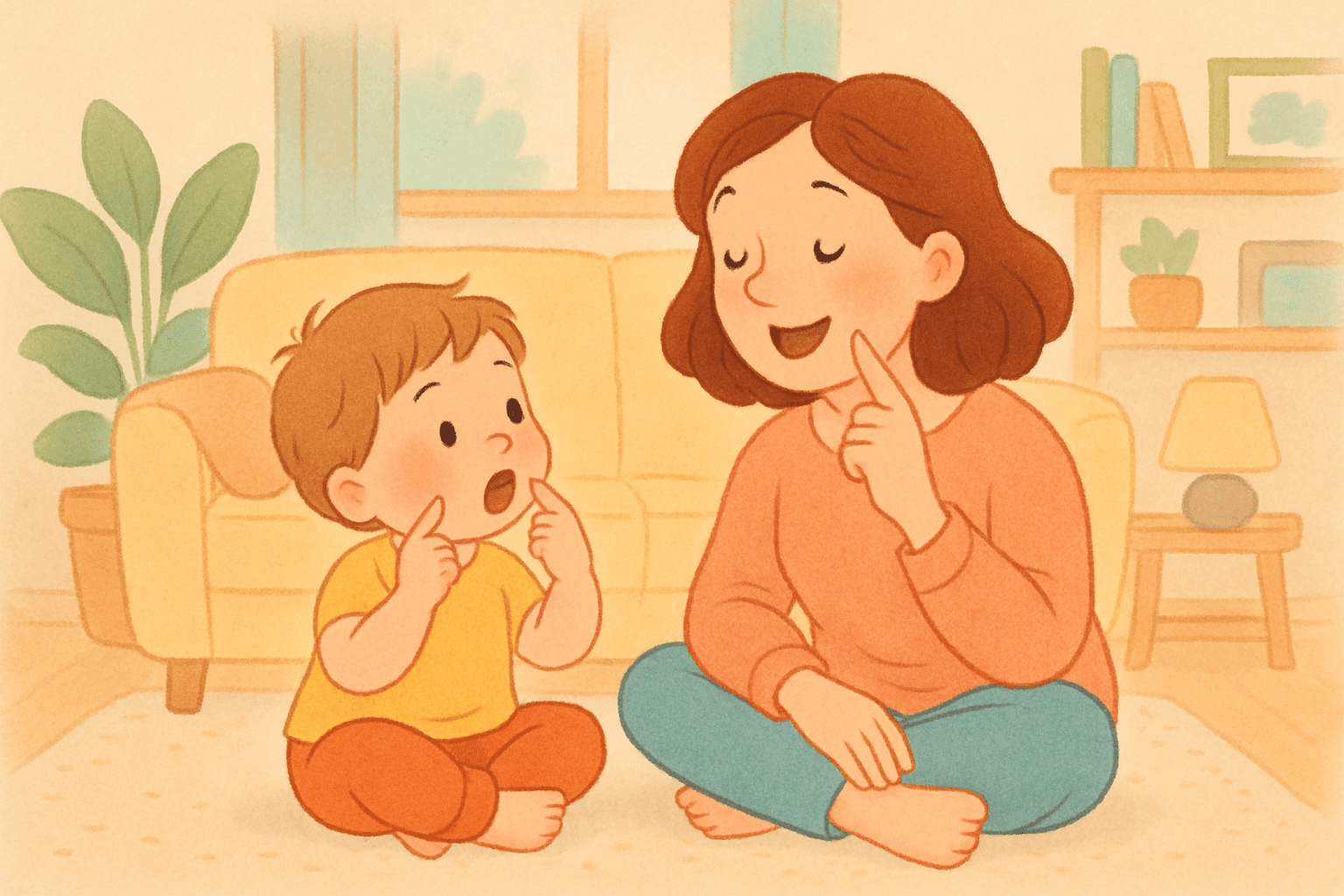
You're Not the Reason Your Child Isn't Talking — But You Can Be the Reason They Start
If you've just been told your 2-year-old has fewer than 50 words or isn't putting two words together yet, the fear and guilt that follow that conversation are completely real — and completely understandable. As a speech-language pathologist who has worked with hundreds of families in exactly this position, I want you to hear this first: you did not cause your child's speech delay, and starting speech delay activities for 2 year olds at home, today, genuinely moves the needle. The research is clear, and the good news is that the most powerful language-learning tool your child has access to is already in your home — it's you.
This article isn't a generic list of "talk to your child more" tips. I'm going to walk you through the exact five techniques used in real speech therapy sessions — the same ones I use with clients — and show you how to weave them into bath time, meals, car rides, and bedtime without adding a single extra item to your schedule.
---
Why Most "Speech Delay Activity" Lists Miss the Point
When parents search for speech delay activities for 2 year olds, they typically find lists of toys to buy or games to play. Those ideas aren't wrong — but without the clinical framework behind them, they're a little like giving someone a scalpel without surgical training. The *activity* isn't the therapy. The *technique you use during the activity* is the therapy.
Speech-language pathologists are trained in a family of evidence-based language facilitation strategies. Five of them are so well-supported by research, and so easy for parents to learn, that I teach them to nearly every family I work with in early intervention:
- Parallel Talk — narrating what your child is doing
- Self-Talk — narrating what *you* are doing
- Expansion — adding one word to whatever your child says
- Recasting — repeating what your child said with a grammatical correction, naturally
- Time Delay — strategic pausing to create communication opportunities
Let's break each one down — and then I'll show you exactly where to slot them into your day.
---
The 5 Evidence-Based Techniques (Translated for Real Life)
1. Parallel Talk: Become Your Child's Sportscaster
Parallel talk means you narrate your child's experience in simple, present-tense language. You're not asking questions or directing — you're just labeling what they see, touch, feel, and do.
Why it works: Children learn words by hearing them repeatedly in context. When you say "the water is warm" as they splash in the bath, the word *warm* is paired with a real sensory experience. That pairing is how vocabulary sticks.
How to do it: Use short phrases — two to four words maximum for a child with fewer than 50 words. Match your language to just one level above their current output. If they're mostly using single words, you use two-word phrases. If they're using two-word phrases, you model three-word sentences.
> *"Splashing the water. Big splash! Cold water. You're washing your tummy."*
2. Self-Talk: Narrate Your Own World
Self-talk is the same idea, but focused on what *you* are doing. This is particularly powerful during routines because children are watching you closely and the actions are predictable.
Why it works: Predictable routines give children the scaffolding they need to anticipate language. When you say "I'm pouring the milk" every single morning during breakfast, that phrase becomes attached to a meaningful, repeated event — and meaningful, repeated language is what gets processed and stored.
> *"I'm cutting your banana. One piece, two pieces. I'm putting it on your plate."*
3. Expansion: The One-Word Rule
When your child says something — even an approximation, even a single sound — you repeat it back and add exactly one word. Not a correction. Not a question. Just one word more.
Why it works: Expansion shows your child that what they said was understood and valued, while gently modeling the next level of language complexity. It never puts pressure on the child to repeat — it simply deposits the richer version into their language bank.
> Child says: *"more"* > You say: *"more cracker"*
> Child says: *"doggy"* > You say: *"big doggy"* or *"doggy running"*
4. Recasting: Fix It Without Correcting It
Recasting is the art of responding to the *meaning* of what your child said while naturally modeling the correct form — no "no, say it like this," no drilling.
Why it works: Direct corrections create communicative anxiety in toddlers. Recasting keeps the conversation flowing while consistently exposing children to correct grammar and pronunciation in a low-pressure way. Studies show recasting is one of the most effective techniques for grammar development in late talkers.
> Child says: *"he goed"* > You say: *"yes, he went really fast!"*
> Child says: *"more mik"* > You say: *"more milk — here's your milk!"*
5. Time Delay: The Power of the Pause
This is the technique parents most often skip — because silence feels uncomfortable. But strategic pausing is one of the most powerful communication tools you have.
How to do it: Create an obvious opportunity for your child to communicate, then wait. Look at them expectantly. Count to ten in your head. Let the silence do its work.
Why it works: Time delay shifts the communicative burden from parent to child. It signals: *I know you have something to say, and I'm waiting for it.* For children who are used to having their needs anticipated, this pause creates the essential experience of *needing* to communicate.
> Hold up two snack choices and look at your child expectantly — and wait. > Start a familiar song and pause before the last word of each line. > Get to the top of the slide and wait before pushing.
---
Speech Delay Activities for 2-Year-Olds: Technique by Routine
Now let's put it all together. Here are five specific, step-by-step activity routines that embed these clinical techniques into the moments you're already having every day.
Activity 1: The Bath Time Language Bath (Parallel Talk + Time Delay)
What you need: Bath toys, cups, or just water
Step-by-step:
- As your child plays, narrate everything they do in short phrases: *"pouring water," "splashing," "the duck is swimming."*
- Pick two or three target words for the bath and repeat them naturally at least five times each: *"in," "out," "pour," "wet."*
- Hold a cup above the water and look at your child with an expectant expression. Wait 8-10 seconds before you pour. See if they say anything — a word, a sound, a gesture.
- If they reach for a toy, pause before handing it over. Look at them. Wait. If nothing comes after 10 seconds, say the word and hand it over — no frustration, no pressure.
- Celebrate any attempt: *"you said 'duck!' Yes, duck!"*
Time required: No extra time — this is your regular bath routine.
Activity 2: The Breakfast Narration Ritual (Self-Talk + Expansion)
What you need: Breakfast as usual
Step-by-step:
- As you prepare breakfast, narrate every action in short, simple sentences: *"I'm getting the bowl. I'm pouring the cereal. So much cereal!"*
- When your child reaches for something or makes any sound, expand it by one word: reach for cup = say *"want cup"* or *"your cup.";* grunt = say the word for what they want.
- Offer two choices and hold both up — then wait with an expectant look. Don't name them first. Give the pause 8-10 seconds.
- Whatever they communicate — word, point, approximation — expand it: *"banana — yes, banana, you want banana."*
- Through the meal, keep your own narration going: *"I'm eating my toast. Mmm, warm toast."*
Time required: No extra time — this is your regular breakfast.
Activity 3: The Car Ride Commentary (Self-Talk + Parallel Talk)
What you need: Any car trip, even a 5-minute errand
Step-by-step:
- Turn off the podcast or music. Car rides are acoustically ideal for language input — your child is contained, facing the same direction, and has nothing to do but listen.
- Narrate what you see: *"I see a red car. Big truck! The light is green."*
- Name emotions you notice: *"That dog looks happy. He's running fast."*
- Pause in familiar songs or rhymes and wait for your child to fill in the word — even a sound counts.
- When you arrive, narrate the transition: *"We're stopping the car. Unbuckling. Out we go!"*
Time required: Zero extra time — you're already in the car.
Activity 4: The Bedtime Recast Story (Recasting + Expansion)
What you need: A simple picture book with familiar objects
Step-by-step:
- Choose books with repetitive phrases and clear, simple pictures — *Brown Bear, Brown Bear* or *Dear Zoo* are ideal.
- Don't read the text. Instead, point to pictures and say one or two words: *"big bear. Brown bear."*
- When your child points or says anything, recast it naturally: child says *"dat"* pointing to the lion — you say *"yes, lion! roaring lion."*
- On the second or third read, pause on a familiar page and wait for your child to fill in a word. If they don't, that's fine — model it without pressure.
- End the book with a simple, predictable phrase every night: *"The end. Night-night book."* Predictability builds language expectation.
Time required: 10-15 minutes, which you're likely already spending on bedtime reading.
Activity 5: The Play-by-Play Floor Play Session (All 5 Techniques)
What you need: 15 minutes and your child's favorite toys
Step-by-step:
- Sit at your child's level. Let them lead the play entirely — follow their lead, don't redirect.
- For the first five minutes, use only parallel talk: narrate what they're doing without asking a single question. Questions put pressure on children and reduce language output in late talkers.
- When they hand you something or include you in play, narrate your own actions (self-talk): *"I'm putting the block on top. Another block! It's so tall."*
- Every time they communicate anything, expand by one word.
- Create a sabotage moment: put a favorite toy just out of reach or put a lid on a container you know they want open. Wait with an expectant face for 10 seconds. Whatever they do — point, sound, word — celebrate it and respond immediately.
Time required: 15 focused minutes, once per day.
---
Red Flags vs. Normal Variation: A Frank Conversation
I want to be honest with you here, because you deserve a clinician's honesty, not just reassurance.
Signs That Warrant an Urgent Referral
If your 2-year-old shows any of the following, please seek an evaluation promptly — don't wait for the next well-child visit:
- Loss of language: Your child had words and has lost them. This is always worth urgent follow-up.
- No pointing or gesturing by 12 months, and still not pointing by 18-24 months
- Fewer than 10 words at 18 months or no two-word phrases by 24 months
- Not responding to their name consistently across environments
- No eye contact or very limited engagement with familiar people
- Frustration so intense it affects daily functioning — hitting, biting, extended meltdowns, particularly around communication attempts
These signs don't mean something is catastrophically wrong. They mean a comprehensive evaluation — from a speech-language pathologist and potentially a developmental pediatrician — will give you the full picture faster, and early intervention works. See our guide to [when to see a speech therapist for your toddler](/when-to-see-speech-therapist-toddler) for a detailed breakdown.
What Is Normal Variation
Some late talkers are simply late talkers — sometimes called "late bloomers" — with no underlying diagnosis. They often have strong receptive language (they understand what you say), make good eye contact, communicate with gestures, and are engaged socially. Their expressive language just lags. Learn more about [the difference between a late talker and a speech delay](/late-talker-vs-speech-delay-difference).
For these children, the home techniques above are particularly powerful, and many make rapid gains with consistent language-rich input and early intervention support.
---
Free Printable: The 7-Day Speech Boost Daily Routine Card
One of the most common things parents tell me after our first session is: *"I know what to do now, but by 3pm I've completely forgotten."* That's not a parenting failure — that's a working memory reality when you're managing a toddler's entire day.
That's exactly why I created the 7-Day Speech Boost Daily Routine Card — a free printable designed for real toddler days.
Here's what's inside:
- A visual daily schedule organized by routine (wake-up, breakfast, play, lunch, car ride, bath, bedtime)
- The specific language technique recommended for each part of the day
- Ready-to-use example phrases for each technique so you never have to think about what to say
- A simple tally section so you can track which techniques you used each day (no guilt, just awareness)
- A "win of the day" space to record your child's communication attempts — because celebrating small moments fuels consistency
This card goes on your fridge, your bathroom mirror, or wherever you need a gentle prompt. Parents who use structured routine cards like this one report feeling significantly more confident and less anxious about their child's language development — because they're doing something, not just waiting.
You'll find free printable worksheets for this topic in our printables library below.
---
The Right Tools: Should You Use a Speech App?
Parents often ask me whether speech therapy apps are worth using for a 2-year-old with a speech delay. My honest answer: they can be a useful *supplement* to human interaction, never a replacement for it.
The best apps for this age group are ones that support *joint attention* — meaning they're designed to be used together, with a parent and child side by side, not handed to a toddler alone. Screen-based passive exposure has not been shown to build language in children under two, and the evidence is mixed for 2-year-olds. However, interactive apps that prompt turn-taking and give parents scripted language models have genuine supporting evidence.
See our expert-reviewed list of [the best speech therapy apps for toddlers](/best-speech-therapy-apps-toddlers) for options that are evidence-aligned. Look specifically for apps that include parent coaching features, not just child-facing games.
For families awaiting an evaluation or on a waitlist for therapy services, a well-designed app used *with* your child for 10-15 minutes a day, combined with the daily routine techniques above, is a reasonable bridge strategy.
---
What to Expect at a Speech Therapy Evaluation
If you're headed toward an evaluation — or already have one scheduled — understanding the process takes some of the fear out of it. Read our full guide to [speech milestones by age](/speech-milestones-by-age-complete-guide) to understand exactly what SLPs are looking at.
In brief: a good evaluation for a 2-year-old will assess both *receptive* language (what your child understands) and *expressive* language (what they produce). The SLP will observe your child in play, ask you detailed questions about their communication history, and may use standardized assessments. You'll leave with a clear picture of where your child is and what the recommended next steps are — whether that's direct therapy, a home program, or a re-evaluation in six months.
Bring your observations. Write down the words your child uses, the sounds they make, how they communicate needs, and the situations in which they seem most communicative. That information is genuinely valuable to the clinician.
---
You Are Your Child's Most Powerful Therapist
I say this to every family I work with: no 30-minute weekly session — no matter how skilled the therapist — can compete with the cumulative effect of a parent who has learned even two or three language facilitation techniques and uses them consistently across a full day of real routines.
You are already doing bath time. You are already doing breakfast. You are already reading books at bedtime. You don't need extra hours in your day. You need a framework — and now you have one.
Start with just one technique this week. Parallel talk during bath time is the easiest entry point for most families. Just narrate. Don't quiz, don't correct, don't pressure. Just describe your child's world in warm, simple words, and watch what happens.
Speech delay activities for 2 year olds don't require a therapy room. They require you — present, warm, and equipped with the right language in the right moments. That's something you can absolutely do.
---
*Want more evidence-based guidance for supporting your late talker at home? Join the SparklingLearners newsletter for weekly expert strategies, free resources, and the reassurance that you're not in this alone. Sign up below.*
Free Printables for This Topic
Browse our free printable worksheets and activity pages for this age and topic.
Get Free Printables Delivered
Get a free starter pack + weekly activity ideas, straight to your inbox.