Montessori Practical Life Activities for Toddlers: The Age-by-Age Guide From 18 Months to Age 4 (With Skills Milestone Chart)
By Sofia Carvalho
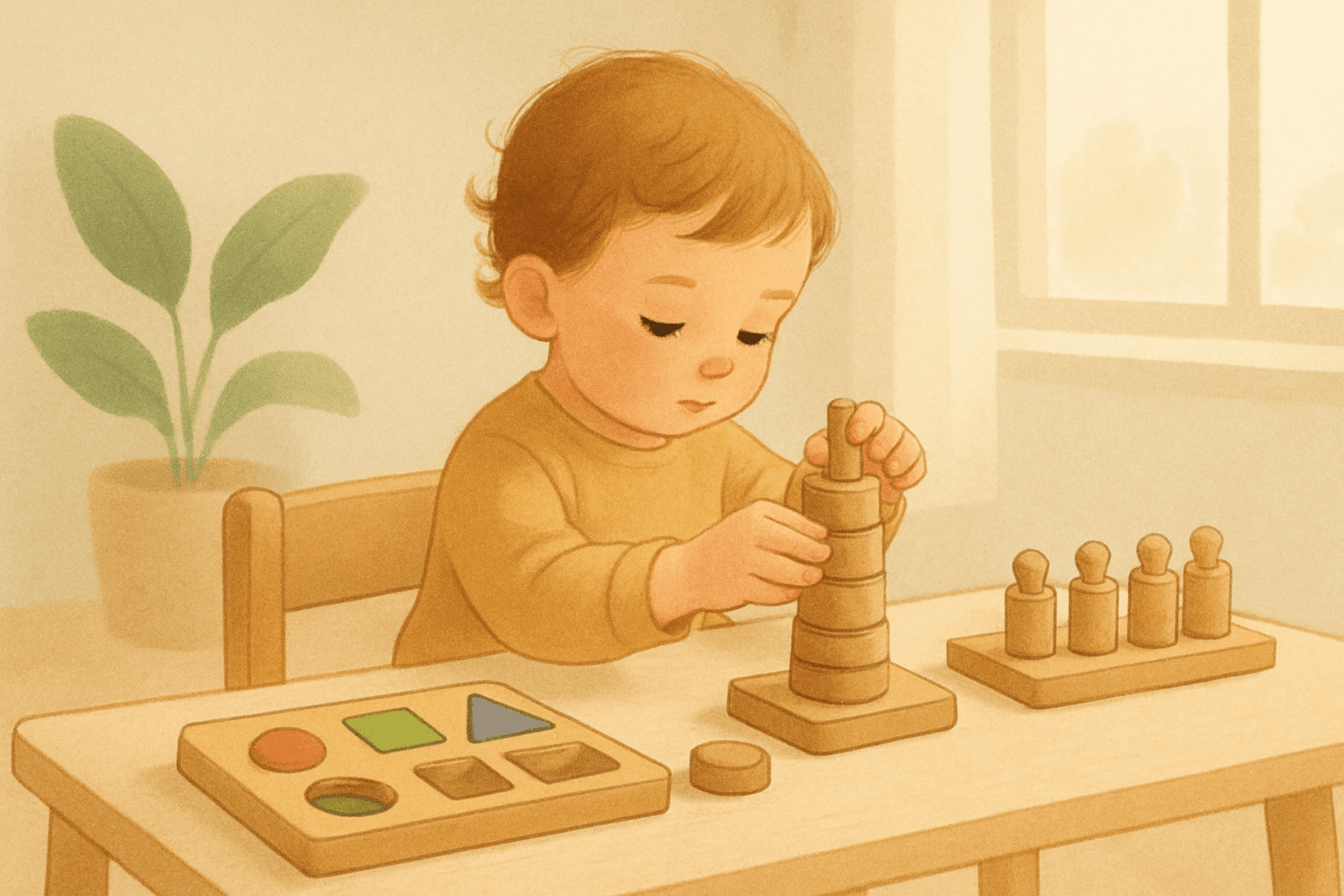
You Want Your Toddler to Be More Independent — Here Is the Roadmap
If you have been watching your toddler struggle to put on their shoes, pour their own water, or carry their plate to the table — and quietly wondering whether they are falling behind — you are not alone, and I want to reassure you right now: your child is not behind. What they are missing is simply the invitation. Montessori practical life activities for toddlers are precisely that invitation: a structured, developmentally respectful doorway into independence that works *because* it allows children to move slowly, imperfectly, and with great personal pride.
In this guide, I am going to walk you through four distinct micro-stages from 18 months to 4 years — not a single flat list, but a genuine age-by-age roadmap that aligns with the milestones your paediatrician already talks about at check-ups. I will share activities, explain the developmental reasoning behind each one, and give you permission to step back and let the mess happen. That mess, as you will see, is the whole point.
---
What Are Montessori Practical Life Activities?
In a Montessori environment, practical life refers to the real, purposeful work of everyday living: pouring, spooning, folding, sweeping, dressing, food preparation, and caring for the environment. Dr. Maria Montessori observed that children between the ages of 2 and 6 are in a sensitive period for order, movement, and the refinement of fine and gross motor skills. Practical life work addresses all three simultaneously.
Unlike play-based busy activities, practical life tasks carry genuine consequence and real-world meaning. When a child sweeps crumbs from the table, the table is actually clean. When they pour their own milk, they actually drink it. This sense of real contribution is what builds the deep, lasting confidence that parents are seeking when they come to Montessori.
Why Practical Life Is Not Just Keeping Kids Busy
Here is the counterintuitive truth that I share with every parent I work with: the goal is never the finished task. The goal is the *process* — the concentration, the muscular coordination, the self-correction, the satisfaction of completing something real. A 2-year-old who spends twelve minutes carefully transferring dried beans from one bowl to another with a spoon is not wasting time. They are building the neural pathways that will later support writing, reading comprehension, and emotional regulation.
When we rush children through practical life tasks or take over to speed things up, we rob them of that process. Sitting on your hands while your toddler slowly, slowly buttons one button is one of the most Montessori things you can do as a parent.
---
How to Use This Age-by-Age Guide
I have divided the toddler years into four micro-stages that reflect genuine shifts in developmental readiness:
- Stage 1: 18–24 months — Large movement, cause and effect, imitation
- Stage 2: 24–30 months — Emerging precision, sequencing, self-care beginnings
- Stage 3: 30–36 months — Sustained concentration, tool use, community contribution
- Stage 4: 36–48 months — Complex sequences, real responsibility, peer modelling
You do not need to introduce every activity at the earliest suggested age. Watch your child. Offer, then step back. The Montessori phrase I return to again and again is: *Follow the child.*
---
Stage 1: 18–24 Months — The Great Imitators
At 18 months, your paediatrician is checking whether your child can walk steadily, begin to run, and imitate simple household actions. This is your developmental cue. Children at this stage are *watching you* with extraordinary intensity and longing to do what you do. The practical life environment at this stage should be large, forgiving, and repetitive.
What Is Developing Right Now
- Gross motor refinement: walking, bending, carrying
- Pincer grasp strengthening
- Object permanence fully established
- Imitation as primary learning mode
- Beginning cause-and-effect understanding
Activity 1: Basket-to-Basket Large Object Transfer
This is often the very first practical life activity I recommend for 18-month-olds, and it never fails to absorb them completely.
What you need: Two small baskets or bowls of similar size, and 6–8 large objects such as wooden balls, large pompoms, or smooth stones.
Step-by-step:
- Place both baskets side by side on a low table or a tray on the floor.
- Put all objects in the left basket.
- Sit beside your child, make eye contact, then slowly — without narrating — move each object one at a time from the left basket to the right.
- When all objects have moved, pause, then slide the tray gently toward your child.
- Say nothing. Simply wait.
- If your child moves objects in any direction at all, receive it with a quiet smile. There is no wrong way.
Developmental link: Supports gross pincer grasp and bilateral hand coordination — milestones your paediatrician checks at the 18-month visit.
Activity 2: Wet Sponge Squeezing
Water work is among the most compelling activities for toddlers at this stage because water responds to their actions immediately and visibly.
What you need: A small tray with a lip, a shallow dish of water, and one natural sponge.
Step-by-step:
- Place the sponge in the water dish on the tray.
- Demonstrate slowly picking up the wet sponge with both hands and squeezing it over the empty side of the tray. Watch the water fall.
- Place the sponge back and invite your child with an open gesture.
- Allow them to squeeze repeatedly. Water on the tray is expected — that is what the tray is for.
- At the end, you can demonstrate wringing the sponge dry and placing it back in the empty dish.
Developmental link: Bilateral hand coordination and hand strength, both markers of fine motor development at 18–24 months.
Activity 3: Pushing Objects Through a Slot
This classic Montessori object-permanence and fine motor bridge activity is deceptively simple and endlessly repeatable.
What you need: A small wooden or cardboard box with a coin-slot-sized opening in the lid, and 8–10 large flat wooden discs or sturdy cardboard coins.
Step-by-step:
- Place the box on a low tray with the discs beside it.
- Slowly demonstrate picking up one disc with your fingertips, aligning it with the slot, and releasing it.
- Pause. Open the box to show the disc inside. Close it again.
- Offer the tray to your child.
- Resist the urge to guide their hand. If they try to force a disc sideways, simply demonstrate again on your turn.
---
Stage 2: 24–30 Months — Precision and the Beginning of Self-Care
By 24 months, your paediatrician is watching for a child who can run without falling, attempt to put on shoes, begin to use a spoon with some control, and engage in simple two-step instruction following. The practical life environment now begins to introduce precision tools and the first real self-care sequences.
What Is Developing Right Now
- Tripod grasp emerging
- Two-step sequencing
- Beginning bladder awareness (toilet readiness window)
- Parallel play and imitation of peers
- Strong desire for autonomy: the word 'mine' and 'I do it' emerge
Activity 4: Spooning Dried Goods
This is the workhorse of the 24-month Montessori shelf and one of the most important montessori practical life activities toddlers encounter at this stage.
What you need: A wooden tray, two identical small bowls, a teaspoon or small wooden spoon, and a small amount of dried lentils, large dried pasta, or dried corn.
Step-by-step:
- Fill the left bowl with your dried goods. Place the empty bowl to the right.
- Sit beside your child and slowly, with deliberate wrist movements, scoop a spoonful and transfer it to the right bowl.
- Continue until the left bowl is empty. Then demonstrate sweeping any spills back into the bowl with your fingers.
- Invite your child. Leave the room if they will allow it — your absence removes the performance pressure.
- When they are finished, show them how to carry the tray to its shelf space.
Developmental link: Tripod grasp strengthening, wrist rotation, and bilateral coordination — all tracked at 24 and 30-month paediatric assessments.
Activity 5: Dressing Frame — Large Buttons
Dressing frames are one of Montessori's most elegant inventions: isolated dressing skills practised in a context that carries no emotional charge (unlike actually getting dressed, which often involves time pressure and a tired parent).
What you need: A simple dressing frame with 3–4 large buttons and buttonholes. These can be purchased or made by sewing buttons and a buttonhole strip onto two pieces of fabric attached to a small wooden frame.
Step-by-step:
- Open the frame completely so the fabric panels lie flat.
- Begin with the bottom button. Demonstrate pinching the button with two fingers, guiding it toward the hole, and pushing it through with deliberate slowness.
- Do just one button, then invite your child to try the next.
- Never undo their work to redo it. An imperfect button that they placed themselves is worth more than a perfect button placed by you.
---
Stage 3: 30–36 Months — Sustained Concentration and Real Contribution
At 30 months, something shifts. Concentration windows lengthen. Children at this stage can hold a task in mind across multiple steps. Your paediatrician will be noting whether your child can follow a three-step instruction, engage in simple make-believe, and show increasing independence in self-care. The Montessori practical life environment at this stage introduces real tools, food preparation, and care of environment tasks that have visible impact on the family.
What Is Developing Right Now
- Three-step sequencing
- Imaginative play emerging alongside purposeful work
- Genuine desire to help — not perform
- Refined pincer grasp: approaching tripod pencil grip
- Beginning to notice and correct their own errors
Activity 6: Simple Food Preparation — Banana Slicing
Food preparation is among the most motivating montessori practical life activities for toddlers at this stage because it ends with something they eat. The investment in the outcome is total.
What you need: A child-safe nylon or wooden butter knife, a small cutting board, a ripe banana, and a small plate.
Step-by-step:
- Peel the banana and place it on the cutting board.
- Demonstrate holding the banana steady with your non-dominant hand, curved fingers tucking your fingertips safely back (the 'claw' grip).
- Using the child-safe knife, slowly cut one slice with a rocking motion.
- Place the slice on the plate.
- Offer the knife to your child. Stay present but do not hover over their hands.
- When they have finished slicing, they carry their plate to the table and eat their work.
Developmental link: The claw grip directly prepares the hand for the pencil grip. Knife skills at this age also build risk assessment and self-regulation, both tracked in social-emotional development at 3-year check-ups.
Activity 7: Sweeping With a Child-Sized Broom and Dustpan
What you need: A child-sized broom and dustpan (not a toy — a real, working set scaled to their height), and a small bin.
Step-by-step:
- Scatter a small amount of dried rice or birdseed on the floor.
- Demonstrate the sweeping motion: small, controlled strokes toward a central pile. Do not rush.
- Show how to hold the dustpan flat on the floor with one hand while sweeping crumbs into it with the other.
- Carry the dustpan to the bin and tip carefully.
- Return both tools to their storage place.
- The next time there are real crumbs after a meal, invite your child to sweep them. Real need, real contribution.
---
Stage 4: 36–48 Months — Complex Sequences and Real Responsibility
By age 3, the sensitive period for order is reaching its peak. Children at this stage are not just imitating — they are internalising sequences, noticing when things are out of place, and beginning to feel genuine ownership over their environment. At your child's 3-year paediatric visit, the doctor will be checking for independent dressing, toilet use, and the ability to follow multi-step directions. The practical life environment now grows in complexity to match.
What Is Developing Right Now
- Multi-step planning and execution
- Increasing reading of visual sequences (left to right)
- Desire for real responsibility, not just practice tasks
- Beginning phonemic awareness (supports reading readiness)
- Strong error awareness and internal motivation to correct
Activity 8: Table Setting
Table setting is a magnificent Stage 4 practical life activity because it combines sequencing, spatial reasoning, fine motor control, and genuine family contribution in one task.
What you need: A placement mat with outlines of the plate, glass, fork, knife, and spoon drawn or painted on it. The child's own set of dishes stored at child height.
Step-by-step:
- Introduce the placement mat by naming each outline and showing the corresponding item.
- Demonstrate carrying one item at a time — plate first, then glass, then cutlery.
- The first week, set your own place at the table and invite them to set theirs alongside you.
- Gradually withdraw: 'Today, can you set your place and Daddy's?'
- Eventually, setting the whole family table becomes their job — not a favour, but a genuine responsibility.
Activity 9: Flower Arranging
This is one of the most quietly beautiful activities in the Montessori practical life repertoire and one that surprises parents with its depth.
What you need: A small glass vase, a pitcher of water, scissors (child-safe but real), and a few simple flowers — dandelions from the garden are perfect.
Step-by-step:
- Place everything on a tray: pitcher, vase, scissors, flowers, a small cloth for spills.
- Demonstrate pouring water from the pitcher into the vase — slowly, watching the level.
- Pick up one flower stem. Hold it next to the vase to gauge length, then cut the stem.
- Place the flower in the vase. Repeat with each flower.
- Carry the vase to a chosen spot in the home — on the family table, on a windowsill.
- The care of the flowers — changing water, removing wilted blooms — extends this activity across the week.
Activity 10: Handwashing Sequence
Handwashing at this stage moves from adult-directed routine to child-owned sequence, which is a profound shift in self-care ownership.
What you need: A child-height basin or step stool at the sink, liquid soap in a small pump bottle, a small towel on a low hook.
Step-by-step:
- Create a visual sequence card with simple drawings: turn on water, wet hands, pump soap, lather, rinse, turn off water, dry.
- Go through the card together once, performing each step.
- From then on, simply point to the card rather than directing verbally.
- Over 2–3 weeks, the card becomes unnecessary — the sequence is internalised.
---
Free Montessori Practical Life Milestone Chart Printable
One of the most common things parents tell me is that they feel reassured when they can *see* a roadmap laid out in front of them. That is exactly why I created the Free Montessori Practical Life Milestone Chart — a beautifully designed two-page printable that maps 40 practical life skills across the four micro-stages from 18 months to 4 years.
What Is Included in the Milestone Chart
Page one is the full skills map: each of the 40 skills is listed by developmental stage alongside the paediatric milestone it supports, so you can immediately understand *why* a skill appears at that age — not just *what* to offer. Page two is your personal tracker: a clean tick-box grid designed to be printed, laminated if you wish, and displayed on your fridge as a living progress document. Tick each skill when your child completes it independently, not when they first attempt it — the distinction matters.
This chart is not a checklist of achievement. It is a map of possibility — a gentle reminder of how much your child is capable of when we trust the process.
You'll find free printable worksheets for this topic in our printables library below.
---
Recommended Tool: The Montessori Shelf Rotation System
One of the questions I receive most often from parents setting up practical life environments at home is: *How do I know when to change the activities on the shelf?* The answer lies in observation — but having a system makes observation actionable.
I recommend reading our in-depth guide to the [Montessori shelf rotation system for toddlers](/montessori-shelf-rotation-system-toddlers), which walks you through the three signals that tell you an activity has been mastered and is ready to rotate out, and how to introduce the next level of complexity without overwhelming your child. Paired with the milestone chart above, this gives you a complete home Montessori management system that grows with your child.
For families who want a physical resource, the Montessori Services wooden dressing frames are the gold-standard tool for Stage 2 and Stage 3 dressing work — they are precisely weighted, beautifully made, and last across multiple children.
---
The Imperfection Principle: What Montessori Asks of Parents
I want to return to something I touched on at the beginning, because it is the thing parents find most challenging: the deliberate, principled acceptance of imperfection.
When your 2-year-old sweeps and misses half the crumbs, the sweep still counts. When your 3-year-old pours their water and spills some, the pour still counts. When the table is set with the fork on the wrong side, the contribution still counts. Correcting these things immediately — or worse, redoing them — sends a message that lands in the body before it reaches the conscious mind: *You did it wrong. Let me show you the right way.*
Montessori asks us instead to offer what Dr. Montessori called an *indirect correction*: a later, separate demonstration of the skill, not tied to the moment of imperfection. Or simply to say nothing and trust that the child's own error-correcting mind — what Montessori called the *control of error* — will gradually refine the action over many repetitions.
This is the hardest practical life work in the room, and it belongs to us as parents.
---
Related Reading at SparklingLearners
If you found this guide helpful, you may also enjoy exploring our article on [Montessori activities for 2-year-olds at home](/montessori-activities-for-2-year-olds-at-home) for additional ideas tailored specifically to the Stage 2 window, and our guide to [fine motor skills activities for toddlers](/fine-motor-skills-activities-toddlers) which pairs beautifully with the practical life progression described here.
---
The Foundation You Are Building
Every time your toddler carefully spoons dried lentils from bowl to bowl, or stands at the sink working through their handwashing sequence, or carries a vase of dandelions to the family table with the concentrated pride of someone doing something that genuinely matters — they are building something that no worksheet, app, or structured lesson can replicate: the deep, embodied knowledge that they are capable, that their work is real, and that the world responds to their hands.
Montessori practical life activities for toddlers are not about producing an unusually tidy house or a child who impresses visitors with their ability to fold napkins. They are about the long, slow, magnificent work of becoming a person who trusts themselves.
You do not need to do all forty skills on the chart. You do not need a perfectly curated Montessori shelf. You need a low table, a willing child, and the beautiful patience to step back and watch them work.
I would love to hear which activity resonates most for your child right now. Come find our community in the SparklingLearners newsletter — every week I share one new practical life idea, one observation prompt, and one reminder that the mess is evidence of the learning. Sign up below and I will see you there.
Free Printables for This Topic
Browse our free printable worksheets and activity pages for this age and topic.
Get Free Printables Delivered
Get a free starter pack + weekly activity ideas, straight to your inbox.