47 Montessori Activities for 2-Year-Olds You Can Set Up in Under 5 Minutes (No Expensive Materials Required)
By Sofia Carvalho
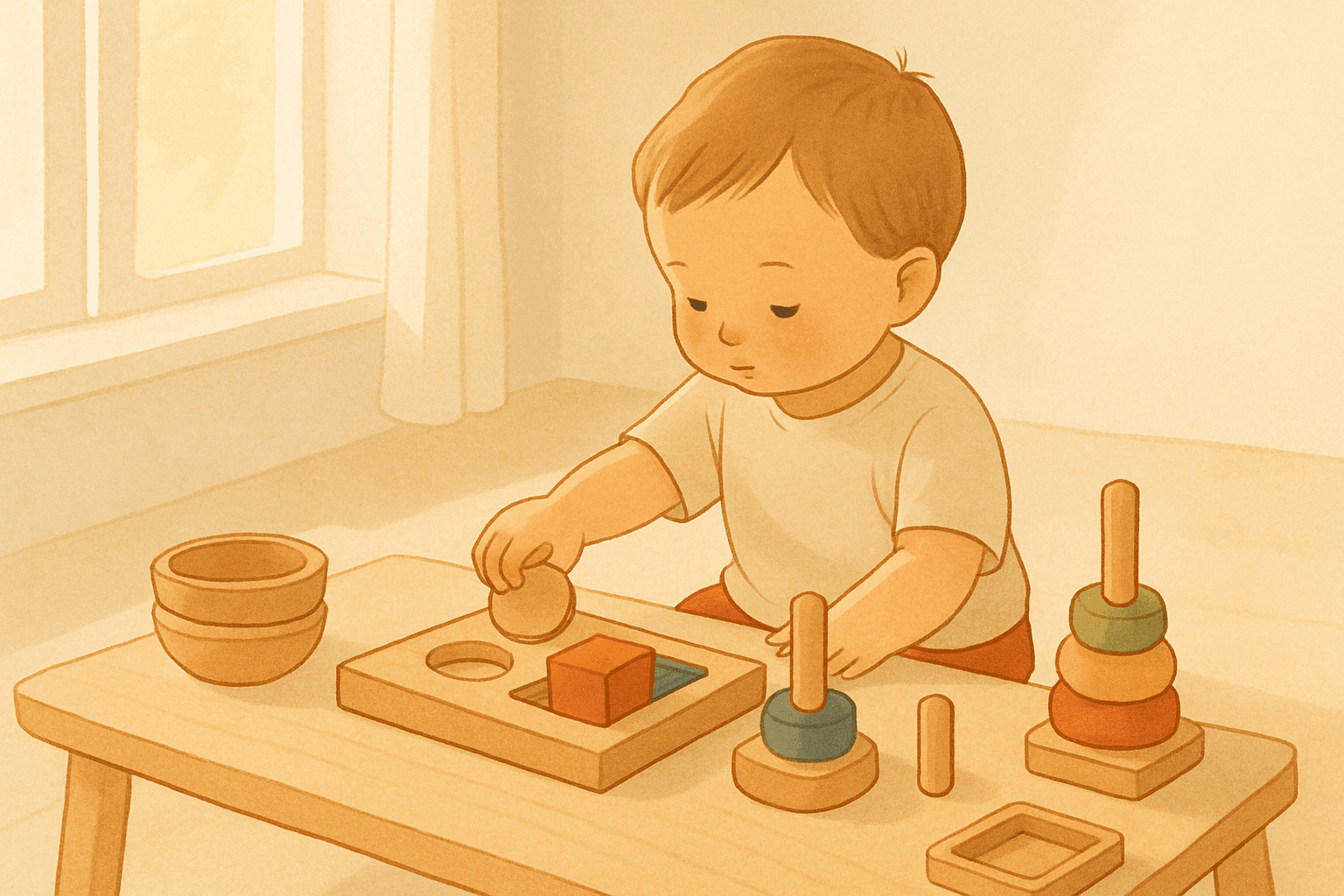
You Don't Need a Pinterest Shelf to Do Montessori at Home
If you've been quietly worrying that your two-year-old watches too much television and you're not doing enough to support their development — I want you to take a breath, because you are already doing more than you realise simply by asking this question. The good news is that genuine Montessori activities for 2 year olds at home do not require a beautifully curated wooden shelf, imported materials, or an hour of preparation before breakfast. They require observation, intention, and the ordinary objects already sitting in your kitchen, recycling bin, and toy basket.
In over a decade of guiding families through Montessori principles, the single most common barrier I encounter is not motivation — it is the belief that Montessori looks a particular way. It does not. Maria Montessori built her philosophy on the idea that children learn through meaningful work with real objects in their real environment. Your home, exactly as it is right now, is already a prepared environment waiting to be activated.
This guide gives you 47 activities grouped by what you already own, a readiness signal guide so you know which activities suit *your* child today, and a free printable to keep everything organised without adding to your mental load.
---
Understanding Your 2-Year-Old's Readiness Signals
Before we dive into the activities, a brief word on observation — the cornerstone of the Montessori approach. Rather than working through a list from top to bottom, I invite you to watch your child for three to five minutes each morning and ask yourself:
What Is My Child Drawn To Right Now?
- Carrying and transporting objects? → Practical life and gross motor activities
- Filling and emptying containers? → Pouring, scooping, and transferring activities
- Lining things up or sorting by colour? → Early maths and order activities
- Tearing, scrunching, or manipulating paper? → Fine motor and sensorial activities
- Narrating everything they see? → Language-rich and matching activities
- Imitating household tasks? → Real-life practical life work
This readiness signal guide is your compass. When an activity aligns with what your child is already internally motivated to explore, engagement is effortless and learning is deep. When you force an activity they are not ready for, frustration follows for both of you.
---
Group 1: Kitchen Activities (5 Minutes or Less to Set Up)
Your kitchen is arguably the richest Montessori environment in your home. Real tools, real substances, and real consequences — this is exactly what the two-year-old mind craves.
Activity 1: Dry Pouring
What you need: Two small cups or jugs, a tray, dried rice or lentils. How to set it up: Place both cups on the tray with a small amount of lentils in one cup. Show your child how to pour slowly from one cup to the other, then return it. Step back and let them work. Why it matters: Pouring develops the pincer grip, concentration, and the control of error (spilled lentils on the tray are visible feedback).
Activity 2: Water Pouring
What you need: Two small matching pitchers or cups, a tray, a small sponge. How to set it up: Fill one pitcher with a small amount of water (less than you think is needed). Place the sponge nearby. Demonstrate the slow pour. The sponge teaches your child to manage spills independently — a Montessori principle called the control of error.
Activity 3: Spooning Chickpeas
What you need: Two small bowls, a teaspoon, dried chickpeas or pom-poms. How to set it up: Fill one bowl with chickpeas. Demonstrate spooning them one at a time into the empty bowl. This activity builds the exact grip needed for writing long before pencils appear.
Activity 4: Fruit Washing
What you need: A small bowl of water, a few pieces of fruit (apple, orange), a small cloth for drying. How to set it up: Show your child how to dip the fruit in water, rub it clean, and place it on the cloth to dry. This is real, meaningful work — and two-year-olds feel enormously capable when they contribute to food preparation.
Activity 5: Peeling a Banana
What you need: A ripe banana, a small plate. How to set it up: Place the banana on the plate and show your child the starting point of the peel. Let them complete the work and eat the result. The snack preparation sequence — gather, prepare, eat, clean up — is one of the most complete Montessori cycles you can offer.
Activity 6: Tong Transfer
What you need: Kitchen tongs (child-sized if possible, but regular work), two bowls, large pompoms or grapes. How to set it up: Demonstrate the pinching action of the tongs. Transfer items from one bowl to the other. Reverse. Repeat.
Activity 7: Stirring
What you need: A bowl, a wooden spoon, water and a small amount of flour or oats. How to set it up: Invite your child to stir while you cook. Name what is happening. This combines practical life work with language enrichment.
Activity 8: Matching Lids to Containers
What you need: A selection of Tupperware containers with their matching lids. How to set it up: Separate all lids from containers and place them in a basket. Invite your child to find each match. This activity develops visual discrimination and problem-solving — and your child is also tidying the kitchen.
Activity 9: Herb Smelling Jars
What you need: Three small jars or containers, dried herbs (basil, cinnamon, mint), fabric circles or lids. How to set it up: Place a different herb in each jar. Invite your child to lift the cover, smell, and describe what they notice. Sensorial education is a pillar of Montessori at age two.
---
Group 2: Recycling Bin Activities
Before your next recycling collection, set aside a small basket of materials. You will be amazed at what a cardboard tube and a cereal box can offer.
Activity 10: Posting Coins into a Slot
What you need: A clean plastic container with a coin-sized hole cut in the lid, large coins or buttons. How to set it up: Demonstrate dropping one coin through the slot. The satisfying click of the coin landing is its own reward — and a natural control of error.
Activity 11: Cardboard Tube Drop
What you need: A toilet paper tube taped vertically to a wall or door (low enough for your child), small balls or rolled-up paper. How to set it up: Drop the ball in the top, watch it fall. Simple, repeatable, joyful.
Activity 12: Egg Carton Sorting
What you need: An egg carton, small objects in two or three colours (buttons, blocks, pom-poms). How to set it up: Place one coloured item in the first cup as a guide. Invite your child to sort the rest.
Activity 13: Scrunching and Unscrunching Paper
What you need: Sheets of newspaper or scrap paper. How to set it up: Simply offer the paper and model scrunching it into a ball and then flattening it out. This strengthens the hand muscles needed for writing.
Activity 14: Collage Tearing
What you need: Old magazines, a piece of card, a glue stick. How to set it up: Invite your child to tear pages (tearing is a precise fine motor skill) and then paste them onto the card. No scissors needed at age two — tearing IS the work.
Activity 15: Bottle Cap Threading
What you need: Bottle caps with holes punched in them (use a nail), a shoelace. How to set it up: Thread the lace through the first cap to demonstrate. This pre-threading work prepares the hands for more complex lacing activities.
Activity 16: Cereal Box Puzzle
What you need: One cereal box front panel, scissors (for you). How to set it up: Cut the panel into four large pieces. Mix them up. Invite your child to reassemble the familiar image. Familiarity is key — your child already knows this box.
---
Group 3: Toy Basket and Shelf Activities
You do not need new toys. You need to rotate what you have and present it intentionally.
Activity 17: Object-to-Picture Matching
What you need: Three small household objects (a spoon, a cup, a shoe), three corresponding pictures from a magazine or printed card. How to set it up: Lay out the pictures, place the objects in a basket. Invite your child to match each object to its image. This builds language, classification, and visual discrimination.
Activity 18: Object Basket — the Heuristic Play Basket
What you need: A basket containing 10–15 safe, interesting household objects of different textures, weights, and sounds (a wooden spool, a smooth stone, a fabric square, a metal spoon). How to set it up: Simply place the basket on the floor and observe. No instruction needed. This sensorial exploration is pure Montessori.
Activity 19: Colour Sorting
What you need: Coloured blocks, Duplo, or objects in two to three clear colours, small bowls. How to set it up: Place one object of each colour in each bowl as a starter. Mix the rest in a central pile. Invite your child to sort.
Activity 20: Shape Sorting with Household Objects
What you need: A cardboard box with holes cut in circle and square shapes (by you), a ball and a small block. How to set it up: Demonstrate posting each shape. This homemade version is just as effective as any purchased shape sorter.
Activity 21: Stacking Nesting Cups (Used Differently)
What you need: Nesting cups or stacking rings (if you own them) OR measuring cups from the kitchen drawer. How to set it up: Instead of stacking, fill each cup with a small amount of rice and ask your child which feels heaviest. This introduces early weight comparison — a sensorial maths concept.
Activity 22: Nature Tray
What you need: A shallow tray, objects gathered on a walk (leaves, stones, pinecones, bark). How to set it up: Arrange the objects on the tray and introduce the language: rough, smooth, heavy, light, spotted, plain. Change the tray weekly to reflect the season.
Activity 23: Book Basket with Real Object
What you need: A picture book featuring an easily recognisable object (an apple, a dog, a ball), plus the real object. How to set it up: Read the book together, then place the real object beside the corresponding page. This three-period lesson approach is classic Montessori language work.
---
Group 4: Practical Life Around the Home
Practical life work is where Montessori truly shines for two-year-olds. These activities are not simulations — they are real contributions to the household.
Activity 24: Sweeping with a Child-Sized Broom
Activity 25: Wiping the Table After Meals
Activity 26: Folding a Washcloth
Activity 27: Carrying a Basket of Laundry
Activity 28: Watering a Plant with a Small Watering Can
Activity 29: Dusting Low Shelves with a Cloth
Activity 30: Putting Shoes Away in a Designated Spot
Activity 31: Hanging a Coat on a Low Hook
Activity 32: Setting Out Placemats Before a Meal
Activity 33: Putting Rubbish in the Bin
For each of these, the Montessori method is the same: demonstrate slowly and silently first, then invite your child to try, then step away. Resist the urge to correct imperfect technique. The process is the point.
---
Group 5: Language and Sensorial Activities
Activity 34: The Mystery Bag
What you need: A cloth bag or pillowcase, five familiar objects. How to set it up: Place objects inside. Your child reaches in, feels an object, names it without looking, then pulls it out to confirm. This develops tactile discrimination and vocabulary simultaneously.
Activity 35: Sound Cylinders
What you need: Six small containers (film canisters, small jars) filled in pairs with rice, dried beans, and bells or small stones. How to set it up: Shake each one and find its matching sound. This auditory discrimination game requires no reading at all.
Activity 36: Object Naming Walk
What you need: Your home and your voice. How to set it up: Walk slowly through one room, pointing to objects and offering the precise names: "This is the windowsill. This is the door hinge. This is the curtain hem." Two-year-olds are in a sensitive period for language and absorb vocabulary like water.
Activity 37: Texture Board
What you need: A piece of cardboard, small squares of fabric, sandpaper, foil, bubble wrap, and a glue stick. How to set it up: Glue each texture square to the card. Invite your child to run their fingertips across each square and find the words to describe what they feel.
Activity 38: Three-Part Cards (Homemade)
What you need: An image cut from a magazine (e.g. a cat), its label written on a strip of paper, a combined card showing both. How to set it up: This classic Montessori language material costs nothing to make and directly supports the reading readiness work described in our [Montessori printables for toddler age 2](montessori-printables-toddler-age-2) resource.
---
Group 6: Outdoor and Movement Activities
Activity 39: Carrying Water in a Bucket Between Two Points
Activity 40: Collecting and Sorting Stones by Size
Activity 41: Sweeping Leaves with an Outdoor Broom
Activity 42: Pouring Water into Outdoor Plant Pots
Activity 43: Chalk Line Walking (Balance and Gross Motor)
Activity 44: Seed Planting in a Small Pot
Activity 45: Washing Outdoor Toys with a Cloth and Water
Activity 46: Nature Sorting: Soft vs. Hard, Smooth vs. Rough
Activity 47: Mud Kitchen Spooning and Pouring
Outdoor Montessori work requires no preparation at all — simply provide real tools at child height and observe what your child chooses to engage with. To understand more about why two-year-olds are particularly drawn to certain types of work right now, our article on [Montessori sensitive periods in toddlers](montessori-sensitive-periods-toddlers) explains the developmental windows that make these activities so powerful at this exact age.
---
Free Printable: Montessori Shelf Setup Planner for 2-Year-Olds
One of the most common questions I receive from parents is: *"How do I know which activities to put out, and when?"* This is where the Montessori practice of rotation becomes your greatest ally — and where our free printable makes the whole process effortless.
The Free Montessori Shelf Setup Planner for 2-Year-Olds is a one-page printable designed specifically for families doing Montessori activities for 2 year olds at home without a dedicated shelf or room.
What's Included in the Printable:
- A weekly rotation map showing 12 activities spread across seven days, drawn entirely from household objects — no purchases required
- A readiness key that codes activities by the skills they support (fine motor, language, practical life, sensorial)
- A checkbox tracker you can laminate and reuse week after week with a dry-erase marker
- A materials list that cross-references everything in this article so you never need to go searching
- A "swap it" column offering alternative materials for each activity if you don't have the primary item
This planner turns the 47 activities in this article into a sustainable weekly rhythm rather than an overwhelming list. Parents who use a rotation system consistently report that their two-year-olds show markedly longer concentration spans — because they encounter activities that feel both familiar and fresh.
You'll find free printable worksheets for this topic in our printables library below.
---
The Montessori Activity Matcher: Find Your Child's Perfect Top 10
With 47 activities to choose from, even the most organised parent can feel unsure about where to begin. That is exactly why we built the Montessori Activity Matcher — an embedded five-question quiz that takes less than two minutes to complete.
You answer five simple questions about your child's current interests (Do they love water play? Are they drawn to small objects? Do they prefer working alone or alongside you?), their current skill level, and what materials you have available at home. The quiz then generates a personalised top-10 activity list drawn directly from the 47 in this article — ordered by the most likely engagement level for *your specific child*.
This tool is particularly helpful if you are new to Montessori philosophy and want guidance before diving in, or if you have tried a few activities and found your child disengaged — the matcher helps you diagnose why and suggests better-fitting alternatives. It pairs naturally with our deeper exploration of [Montessori vs play-based learning](montessori-vs-play-based-learning-differences), which helps parents understand why the intentional structure of these activities produces different outcomes to free play alone.
Take the Montessori Activity Matcher quiz now to receive your personalised list.
---
A Note on What Montessori at Home Actually Looks Like
I want to gently address something that the images you see on social media may have led you to believe: Montessori at home does not look serene and perfectly arranged at all times. It looks like lentils on the floor. It looks like a two-year-old insisting on pouring their own water seventeen times in a row. It looks like a parent biting their tongue when a carefully arranged tray is immediately tipped upside down.
This is correct Montessori. The repetition is neurological consolidation. The tipping is hypothesis testing. The mess is evidence of concentration.
What you are cultivating with these activities is not a performance of learning — it is the internal architecture of independence, focus, and confidence. The two-year-old who is trusted to sweep a floor, pour their own drink, and match a lid to a container is building a relationship with their own capability that no screen can replicate.
You do not need expensive materials. You do not need a dedicated room. You do not need hours of preparation. You need five minutes, a tray, and the willingness to step back and observe. That is the whole of it.
---
Conclusion: You Are Already Ready
If you have read this far, you have everything you need to begin offering genuine Montessori activities for 2 year olds at home today. Choose one activity from the kitchen group. Set it up on a tray. Demonstrate it slowly and silently. Then move away and watch what happens.
You may be surprised by the quality of attention your child brings when the work is real, the materials are familiar, and the expectation of perfection is removed.
Come back to this article as your child grows and their interests shift — the readiness signal guide at the top will help you re-calibrate with each new developmental stage. And if you would like a steady stream of Montessori-aligned guidance delivered directly to you, join the SparklingLearners community below. Each week, we share practical, philosophy-grounded ideas that take five minutes to read and five minutes to set up — because that is all the time most families actually have, and it is genuinely enough.
You are not behind. You are beginning. And beginning is everything.
Free Printables for This Topic
Browse our free printable worksheets and activity pages for this age and topic.
Get Free Printables Delivered
Get a free starter pack + weekly activity ideas, straight to your inbox.